
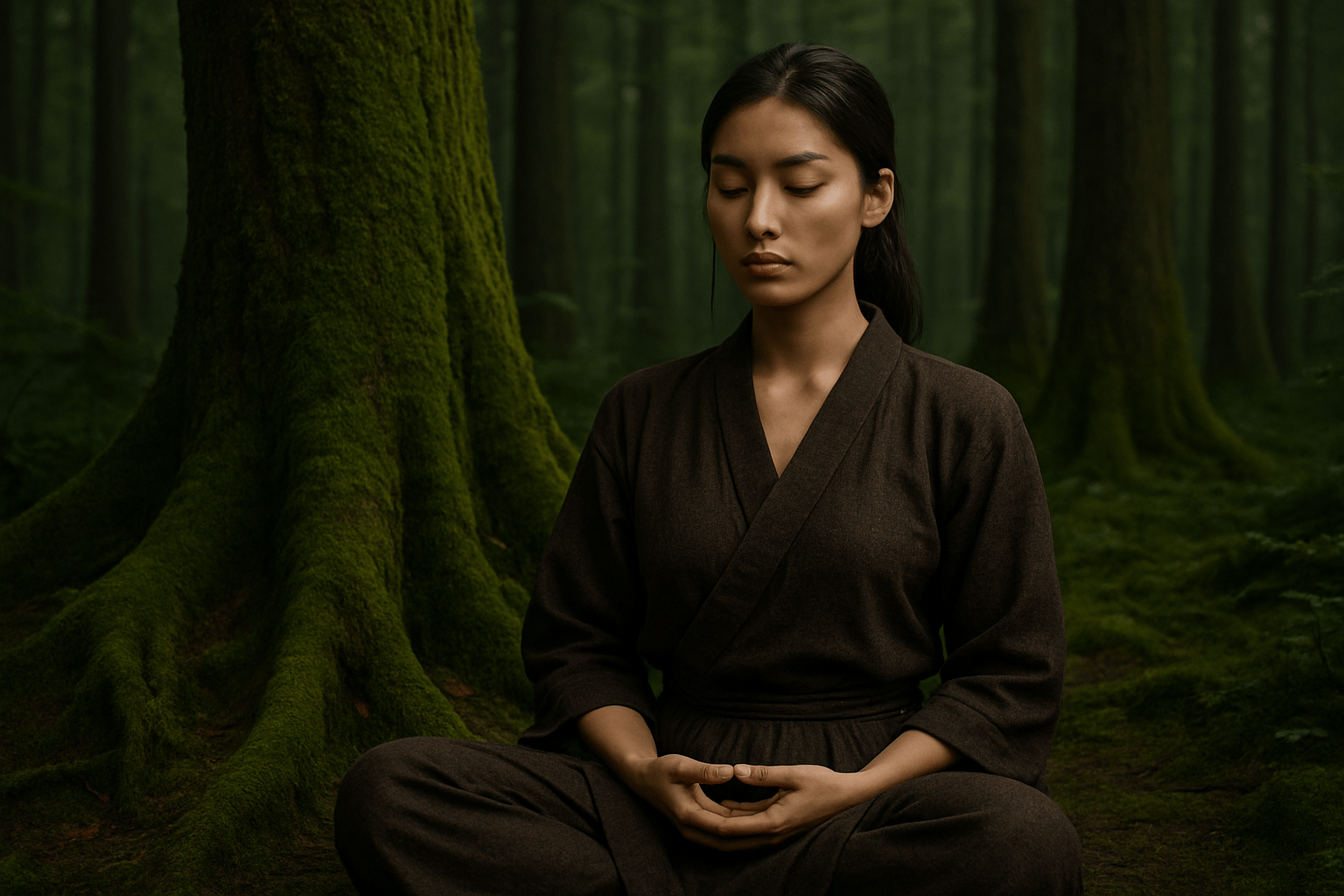
Is Reiki Jin Kei Do the Right Fit for You?
When exploring Reiki as a path, it’s easy to assume that all systems offer roughly the same thing: healing techniques, hand positions, attunements, and a certificate.
But Reiki Jin Kei Do (RJKD) is built differently, and deliberately so.
This system integrates spiritual discipline, meditative focus, and inner development alongside healing methods. It’s a path rooted in self-practice, inner clarity, and a lineage that prioritises personal evolution. That makes it a strong fit for some, and not necessarily the right fit for everyone.
Why You Should Choose the Right Reiki Lineage
Students come to Reiki with different intentions. Some are looking for quick training to begin a healing practice. Others are drawn to systems rich in symbolism or spiritual messaging. And some seek a path of steady practice and long-term transformation.
Reiki Jin Kei Do invites a particular kind of inquiry:
“Is this system aligned with what I actually want from Reiki, not just today, but over time?”
If your interest lies in personal growth, meditative structure, and the deeper philosophy behind Reiki, this may be the system that supports you best.
Who This is Not For
Clarity around fit matters just as much as finding the right teacher. Reiki Jin Kei Do is not designed for mass delivery or fast-track certification. If your goals are rooted in convenience or recognition, this probably isn’t your path.
This system is likely not for you if you:
- Are looking for a quick, self-paced course with minimal personal commitment
- Want to receive a “Reiki Master” certificate in a weekend or via a pre-recorded online programme
- Prefer systems that emphasise spiritual messages, symbols, or external channelling (e.g., angelic energies, cosmic frequencies, ascended masters)
- Are primarily focused on healing others without an equal commitment to your own spiritual practice and self-inquiry
This isn’t about judging those paths; they serve different purposes. Reiki Jin Kei Do simply follows a different map: one that begins with inner transformation.
When Reiki Isn’t What Someone Is Looking For
Some years ago, I was teaching a small Reiki Level 1 class in Cairo, just four or five students: a quiet, focused group. During the first morning, one of the students interrupted and asked when we would be learning how to connect with guardian angels.
I explained that we wouldn’t. This was a Reiki class, and that kind of material isn’t part of the Reiki system.
A little later, she asked when we would be working with ascended masters. I gave the same answer. Reiki doesn’t involve channelling external beings or spiritual entities.
She stayed for the rest of the day but didn’t return for the second. It was clear that what she had come looking for wasn’t going to be found in this training.
This was simply a mismatch of expectations. She was looking for a symbolic or channelling-based spiritual framework, while Reiki Jin Kei Do is grounded in direct practice, self-awareness, and disciplined inner development.
That kind of clarity is important. Reiki Jin Kei Do isn’t designed to meet every spiritual preference. It’s built for people who want a grounded, lineage-based practice, not one centred around angelic, cosmic, or externally guided systems.
RJKD is the Right Fit If…
RJKD tends to resonate with students who:
- Are looking to deepen their own spiritual and meditative practice
- Want to learn Reiki as an integrated system, not just as a therapeutic tool
- Appreciate lineage-based teaching with clear progression and support
- Value inner inquiry and the role of awareness in healing work
- Are open to evolving over time, rather than seeking instant transformation
- Is tired of generic, short-form spiritual courses and is seeking an authentic, verifiable lineage that offers decades of practice depth.
- Sees healing as an act of self-mastery and is prepared to face inner blockages, rather than just treating external symptoms.
This is a system for those who want to live their Reiki, not just learn it.
This long-term, committed path ensures you gain access to the deepest teachings available in the lineage, including the potential for advanced internal practice in the Buddho system, for those seeking the profound.
What RJKD Demands of Your Time and Focus
Reiki Jin Kei Do asks for consistency, not perfection, and honours the fact that growth takes time.
Here’s what to expect:
- Training time: Around 10–15 hours of structured learning per level
- Practice integration: Students are encouraged to take time to establish their personal meditation and self-treatment practices before progressing to the next level.
- Personal practice: Meditation is part of the system from the very beginning, not an optional add-on
- Experience-based learning: Hands-on components vary by format. In-person students receive direct practice and real-time feedback, while online students are guided through meditative and energetic exercises via video, live instruction, and tailored support appropriate to the digital format.
- Mentored progression: Ongoing support is available at all levels, with many students choosing to stay in contact for years
This isn’t just a course; it’s an evolving relationship with the practice and yourself.
What About Buddho?
After Reiki Level 2, some students choose to explore Buddho, a meditative and energetic system preserved within the lineage of RJKD.
Buddho builds on the foundation of Reiki, offering a deeper internal path of practice and energetic development. It’s not a requirement, but it’s available for those who feel drawn to more advanced internal work.
This allows students to either continue with Levels 3A–3C of Reiki, or pivot into Buddho as an alternative progression.
Why RJKD Remains a Smaller Lineage
Reiki Jin Kei Do is practised globally, but it has never been designed for mass delivery. The structure of the system, and what it asks of the student, naturally limits how many people are drawn to it and how many choose to stay.
The Pattern I See in Experienced Practitioners
From time to time, people come to me who have already trained extensively in other Reiki traditions. Many of them are experienced practitioners, some already holding Reiki Master qualifications. What they tend to describe is not dissatisfaction with Reiki itself, but with how shallow, fragmented, or inconsistent their previous training felt over time.
A recent example was a therapist who initially approached me because she was interested in Buddho, but openly admitted she had little respect for Reiki based on her earlier experiences. She described it as something she could not take seriously and had no desire to revisit. I explained that Buddho is built on a Reiki foundation and that she would need to complete Reiki Levels 1 and 2 first.
Reluctantly, she agreed.
As the training unfolded, her relationship with Reiki changed completely. What she encountered was not what she had previously experienced. She found depth, structure, and coherence. Reiki began to integrate naturally with other modalities she had trained in, rather than sitting alongside them as something superficial. She is now fully committed to the path and intends to train as a Reiki teacher herself.
I see similar patterns with other students, including practitioners who have trained many times elsewhere and later choose to switch to Reiki Jin Kei Do because of the depth, integrity, and quality of the teachings.
Why This Limits Scale by Design
These are not isolated cases. Reiki Jin Kei Do tends to attract people who are committed to depth, self-inquiry, and long-term practice rather than speed, novelty, or external validation. That naturally filters out those looking for quick certification or light engagement.
In a world where many spiritual systems are being streamlined for mass consumption, RJKD preserves a slower, more deliberate path rooted in practice, depth, and inner change. Its emphasis on meditative focus, disciplined progression, and long-term integration means it will never appeal to everyone, and it is not intended to.
This lineage grows through personal commitment and sustained practice rather than scale. That is why it remains smaller, and why it continues to attract a very specific kind of student.
If that feels like what you’ve been searching for, this path may be worth walking.
Does Reiki Jin Kei Do Feel Like a Good Fit?
If what you’ve read here resonates, the next step is to understand what training in Reiki Jin Kei Do actually involves, how it’s taught, and whether that way of learning feels appropriate for you.
You can find a clear overview of how I teach Reiki Jin Kei Do, what the training structure looks like, and how people usually begin here:
There’s no expectation to decide anything at this stage. This is just a way of seeing what working together would actually look like in practice.
Related Articles:
Why Reiki Training Costs Vary So Widely
How Reiki Jin Kei Do Compares to Other Reiki Systems
Online Reiki Training vs In-Person Reiki: What Actually Makes the Difference?
Best Reiki Training: 5 Signs of a High-Quality Course (+ Red Flags to Avoid)
Reiki Training Reviews: What Students Say After Learning with Steve Gooch
Other ways to stay connected:
Subscribe to Energy, Consciousness & The Self newsletter

So glad I happened upon your trainings. It was exactly what I needed when I wasn’t truly sure what I was looking for when it came to reiki training. The inner work has been so transformational and continues to be. Looking forward to one day being able to share this lineage with others who are interested in doing the inner work.
Thanks for your comment Jen, and it’s always a pleasure to have you on a class. I’m sure that eventually you will be passing these teachings on to others. I’m looking forward to having you on future classes.